


Princess Diana would have been 65 today. A disturbing AI trend is keeping her alive.
Princess Diana would have been 65 today. A disturbing AI trend is keeping her alive.

Jennifer Hassan, USA TODAYWed, July 1, 2026 at 8:01 AM UTC
0
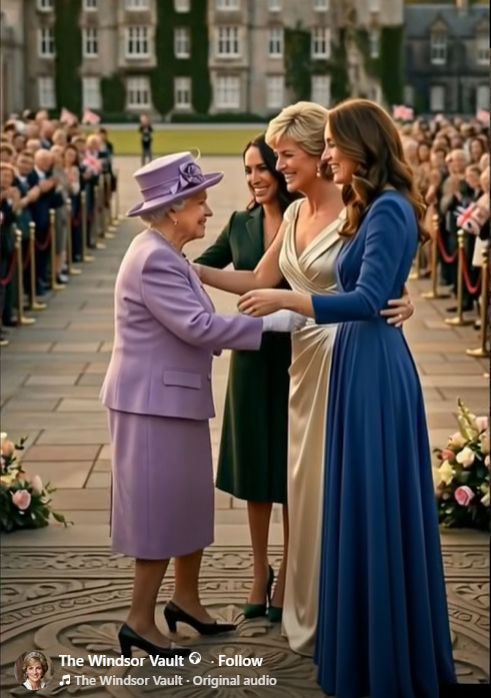
Princess Diana walks across a garden into the arms of Princess Kate and Duchess Meghan, the daughters-in-law she never met. In the video, they embrace sweetly, folding Queen Elizabeth II into a group hug.
In another clip, she reunites with her adult sons, Prince William and Prince Harry, even though the estranged brothers haven't been in the same room for almost two years. And there's one of her in a horse-drawn carriage with Michael Jackson, the popstar who met the princess once in 1988 backstage at Wembley Stadium.
Countless AI-generated videos of Princess Diana, who would have turned 65 on July 1, in surreal situations are flooding social media. They're part of a growing and polarizing trend, generating millions of views – and ethical questions.
In life, Princess Diana was one of the most photographed women in the world, right until she died fleeing paparazzi in Paris in 1997. It has been almost 30 years since her death, but images of the princess are still being used for gain in the online currency of likes, comments and shares.
Beyond the debate over whether the AI videos are tasteful tributes or plain tacky, experts say there are other risks to the proliferation of deceptive images and, thanks to modern technology, a new content format has been born from grief and public nostalgia.
Princess Diana AI videos go viral, sparking ethics debate
High-profile deceased figures are "frequently targeted" in the AI world, says AI and deepfake expert Henry Ajder — and it leads to an ethical quagmire.
"This is what I refer to as synthetic resurrection. It has become a really big trend," he says.
Some of the people behind these videos say their posts are a tribute to Diana, citing her powerful legacy. Some viewers appear to enjoy seeing the princess in modern settings, pondering over what could have been if her life wasn't cut short. Other social media users have branded the videos "disrespectful."
In one AI video on X, Diana is in heaven with Pope Francis, Robin Williams and Kobe Bryant. In an Instagram video with 2.8 million views and more than 35,000 likes, Diana tucks into some of her known favorite dishes. A pink grapefruit, followed by stuffed peppers, then a plate of poached salmon. She giggles when she can have a bite of bread pudding.
Ajder believes the people creating these "hyper-engaging" videos are unlikely to be "die-hard fans of the royal family, wanting to pay tasteful and respectful tributes to Diana," but instead are digital opportunists attempting to "farm engagement that can then translate into financial return."
Most platforms allows creators to "translate views of content into direct financial return based on a kind of partnership agreement," Ajder explains. Large followings mean more attention, leading to sponsored posts and ads, he says. Pages with large followings can also launch merchandise.
The videos are not necessarily "dangerous," Ajder says but they are "concerning," because they can distort views of public figures and their legacies.
"In the future, is it going to be harder for us to say this happened or this didn't happen? Even if the videos are not meant to be malicious they can still pollute the information space," he says.
The attention economy, he says, relies on emotion. Creators "are going to be incentivized to make people feel something," Adjer says. "Those incentives don't necessarily align with what is historically the case."
Advertisement
Social media consultant Matt Navarra notes that while videos like Diana hugging her grown sons "can look incredibly harmless" and aren't obviously defamatory with a sexual or political nature, such videos can still create a "harmful dynamic."
The volume of AI videos could "distort cultural memory," Navarra says. "Younger audiences in particular may encounter authentic archive footage and fabricated footage in exactly the same vertical feeds. One silly video probably doesn't rewrite history but thousands of synthetic videos can slowly muddy the visual record," he says. The videos also don't recognize " the family's experience" he says. In other words, their private pain.
A growing AI trend that is hard to contain
A Facebook page with 13,000 followers titled "The Windsor Vault" frequently shares AI videos of the princess and other members of the royal family. The creator of the videos declined to comment when approached by USA TODAY.
"To recreate Diana using AI as though she lived today or in any fake video is obviously tasteless," royal commentator Richard Fitzwilliams tells USA TODAY. "The problem is that it does not seem possible to control this sort of activity."
For most celebrities in the US, their estate can work to protect their name, image and likeness. Diana's financial estate went to William and Harry.
A spokesperson for Prince Harry did not return a request for comment about his thoughts about such images. Kensington Palace and Buckingham Palace also did not return a request for comment.
But Harry and Meghan have been vocal about both AI and social media, even calling out AI chatbots working to advance the companies' "depraved internal policies.”
For his part, Prince William has embraced the technology, urging big tech companies to leverage tools to help prevent homelessness.
The Diana AI recreations could be "incredibly uncomfortable" for her family, Navarra notes. "Her grandchildren are also being placed into fictional scenarios ... A creator might describe that as a tribute, but the family could reasonably experience it as a stranger creating their most personal relationships."
Navarra notes that while some users follow social media AI-guidelines that require labels of AI-created content, "transparency is not the same as permission."
Many of the AI videos "present an idealized version of Diana in which she permanently smiles, hugs people and resolves family conflicts," Navarra says. These "emotionally perfect scenarios" may actually "flatten a complicated human being into an algorithmically generated symbol of kindness and reconciliation.
"The creator controls the image but the family carries the emotional consequences," he says, adding William and Harry have no control over what their mother "is made to do" in such footage.
"Public figures surrender a degree of privacy during their lives but that should not automatically mean their identity becomes an open-source asset after death," Navarra says.
"Today she is hugging William and Harry, tomorrow she can be made to endorse a product, express a political opinion or behave in a way that's far less respectful."
This article originally appeared on USA TODAY: Princess Diana videos get millions of views in 'synthetic resurrection'
Source: “AOL Entertainment”
